 David Heinemeier HanssonandClaude Fable 5
55434792d1
David Heinemeier HanssonandClaude Fable 5
55434792d1
Add chapters for the top bar and its panels, screenshots and recording,
toggles/idle/screensaver, browsers, shell plugins, and networking, which
collects the Wi-Fi, DNS, firewall, and Tailscale material that was spread
across the FAQ, TUIs, and services chapters.

Fill smaller gaps in the existing chapters: user hooks, autostart, menu
extensions, printing, power profiles, factory reset, drive and user
passwords, passwordless sudo, firmware updates, display text size, and
the LocalSend share menu.

Co-Authored-By: Claude Fable 5 <noreply@anthropic.com>
4.3 KiB
Getting Started
Omarchy is installed using an ISO. You can choose between a full-disk install, which takes over the entire drive, or a free-space install, which puts Omarchy in the unallocated space on a drive — that's how you dual boot alongside Windows or another OS (see dual-boot install — note that you'll need to turn off BitLocker in Windows first). Either way, the installation uses full-disk encryption, and the full-disk option will wipe the selected drive, so be sure to take a backup before using an existing one!
Download the Omarchy ISO first, put it on a USB stick (use balenaEtcher on Mac/Windows or caligula on Linux), and boot off the stick.
You must turn off Secure Boot and/or TPM in the BIOS. You have to turn these off to be able to install Omarchy. They're Microsoft security schemes meant for Windows and Microsoft-affiliated Linux distributions.
Then answer the configuration questions, and confirm them like this:
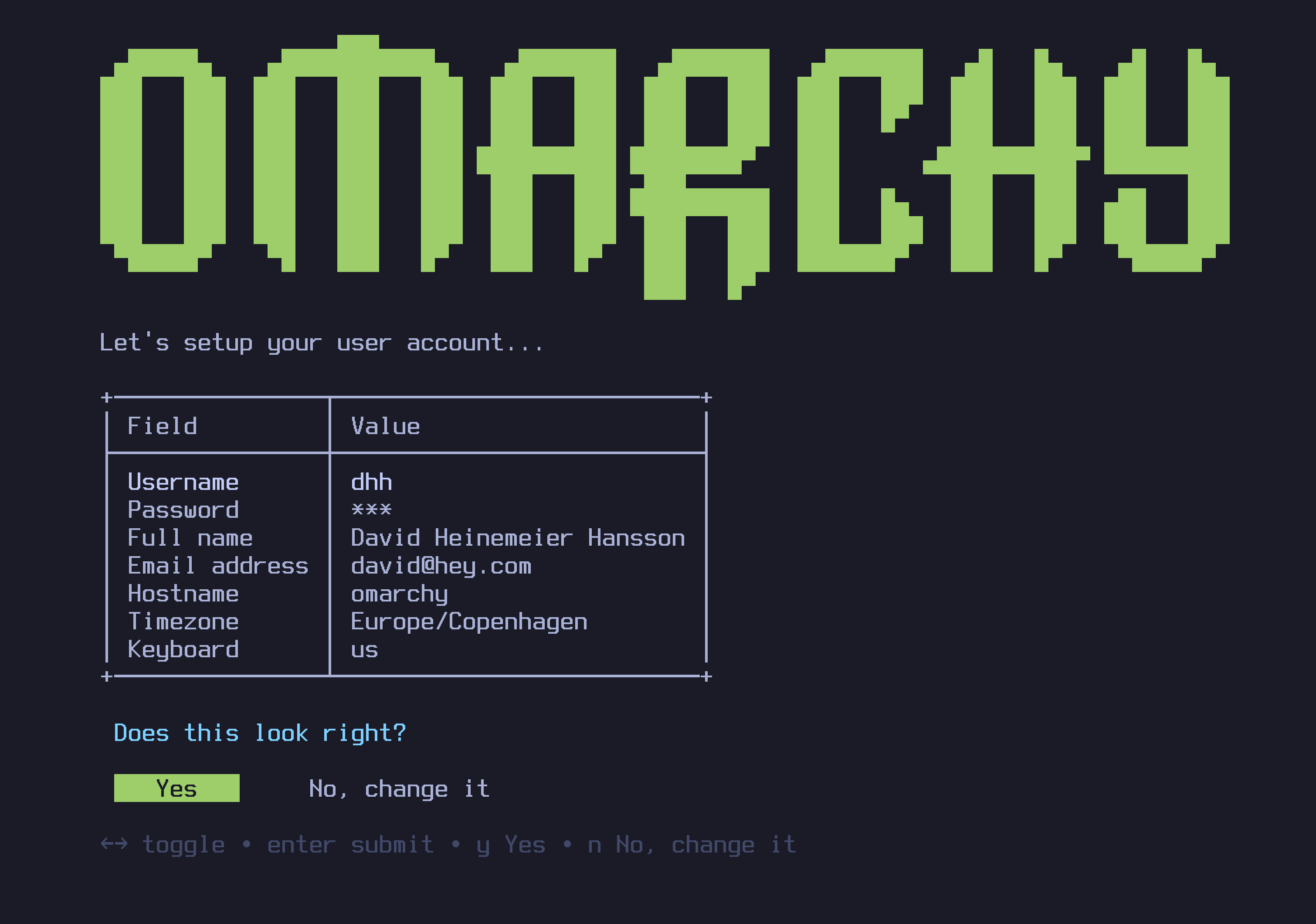
Then select a drive for your installation, and sit back and watch the installation show go. It takes between 2-10 minutes, depending on the speed of your computer.
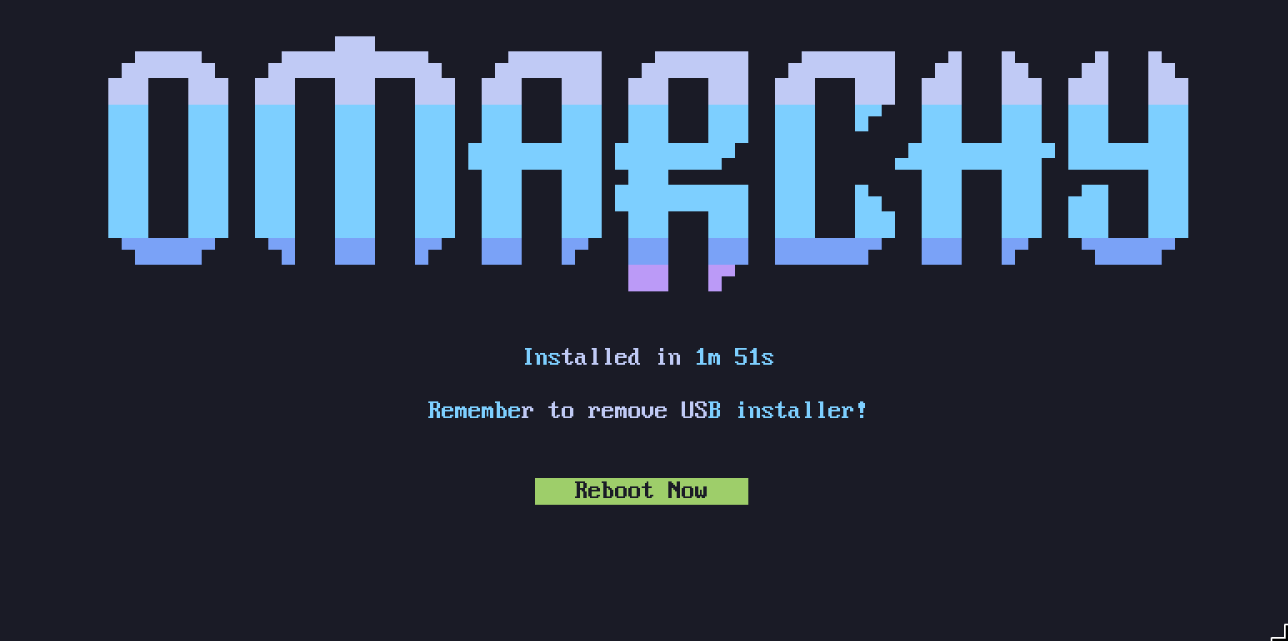
Now you're ready to Omarchy!
Use a wired or 2.4ghz keyboard!
The full-disk encryption won't allow you to enter the password from a Bluetooth keyboard at startup. Just like you can't use a Bluetooth keyboard to enter the BIOS on a PC. You'll need a keyboard that either uses a 2.4ghz dongle or a cable (which is much nicer for latency anyway!). I personally love the Lofree Flow84!
Installing for another owner
If you're setting up a machine for someone else — a family member, a new employee, a buyer — you shouldn't be answering the personal questions on their behalf. Hit Ctrl + C on the very first screen of the installer (the keyboard selection), and Omarchy will offer to prepare the machine for another owner instead. The system installs right away, but all the personal setup — keyboard layout, username, password — is deferred until the machine boots for the first time. The drive is still encrypted by default, and the password the new owner picks on that first boot becomes the encryption password too.
Passing on a machine you've already used
If the machine is one you've been using yourself, you don't have to reinstall it to hand it over. Run Setup > Reset Computer in the Omarchy menu, type reset to confirm, and reboot. That wipes every user account and everything in /home, throws away all the packages and system changes you made since installation, and clears the machine's identity — network connections, host keys, and all. What comes back up is the setup wizard from the first boot, ready for its new owner to enter their own name, password, and encryption password.
It works by restoring the baseline snapshot the installer takes, so it's only available on machines installed from the Omarchy ISO. And on a drive without encryption, a reset is deletion rather than a secure erase, so if the data was sensitive, do a fresh install instead.
Unattended installs
The ISO can also install completely on its own — no keyboard, no wizard — when it's handed its configuration on a second drive. That's the way to treat Omarchy as a base image for VMs and fleet machines. See unattended installs.
No-encryption installations
Omarchy is installed with encryption by default. It's the safe, responsible choice for any computer that can possibly be lost or stolen. You don't want anyone with access to your hardware to be able to get your data!
But in special circumstances, like remote Omarchy installs on protected computers or for throw-away installations without sensitive data, you may want to install without encryption. You can hit Ctrl + C on the disk formatting confirmation to switch to an encryption-less installation.
Help if you're stuck
If you get stuck, you can usually find someone willing to help in the #omarchy-help channel on the community Discord.